A video can explain a service clearly and still lose the viewer before that explanation begins. The opening needs to help the right person recognize a relevant situation quickly.
Our Instagram reel on opening hooks introduces a “pattern interrupt”: a change in what someone expects to see or hear that gets their attention. For a service business, the most useful interruption is connected to the job. A surprising visual with no connection to the offer can attract the wrong attention.
Open with the work already happening
Instead of beginning with a logo animation and a long introduction, try a real action, a finished detail, or a customer question. Then identify the business naturally as the explanation develops.
Three illustrative openings for the same screening service:
- Question: “Repairing one damaged panel or planning a bigger patio update?”
- Demonstration: Show the relevant project detail while explaining what the viewer is looking at.
- Preparation: “These photos help us understand your screening project before we talk.”
These openings reach different customer situations. Do not assume the loudest version is the best one.
Make the opening understandable without its caption
Watch the first few seconds with the sound off. Can you identify the service or problem? Then listen without looking. Does the spoken opening make sense on its own?
Use readable captions to support the message. Avoid filling the frame with several competing claims, labels and animations. If the viewer must pause to decipher the offer, simplify it.
Also check whether the opening promises something the rest of the video actually delivers. A question about pricing should lead to an honest explanation of pricing factors, not an unrelated montage.
Film three openings for one main explanation
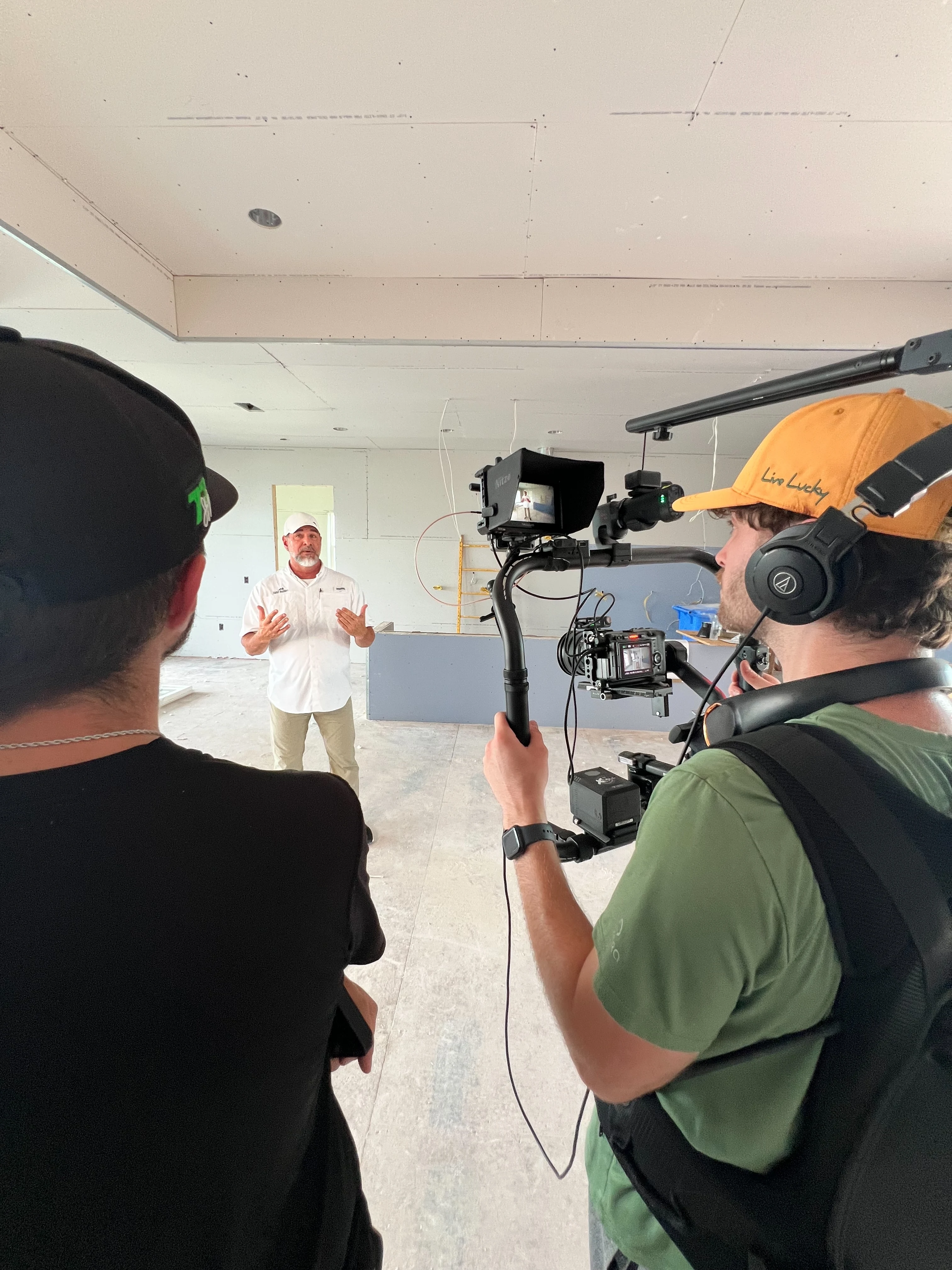
You do not need three complete productions to test an opening. Record one clear explanation and several ways to introduce it. Keep the footage after the opening, the offer and the next step consistent.
Write a test sheet before launching:
| Version | Opening idea | Who should recognize it? | What would count as success? |
|---|---|---|---|
| A | A common question | Customers comparing project options | More suitable estimate inquiries |
| B | A real demonstration | Customers with the illustrated problem | More inquiries about that service |
| C | An estimate-preparation tip | Customers ready to discuss a project | Better information submitted |
These are planning examples, not campaign results.
Follow attention through to the appointment
An opening that keeps people watching is useful only if the rest of the journey works. Review viewing behavior alongside inquiries, qualification and appointments. If attention rises but suitable inquiries do not, investigate the message and offer before declaring a winner.
Keep the comparison fair. Different audiences, different budgets and different follow-up processes can explain a result that appears to come from the opening. Record what changed and avoid drawing a confident conclusion from a handful of responses.
Keep the lesson; skip universal timing rules
The original reel uses precise attention and performance figures in its pitch. Those figures should not become a universal promise for every business or video. The practical lesson is to remove unnecessary delay, make the situation recognizable and test with your own audience.
On your next shoot, record a question, a demonstration and a preparation tip before wrapping up. That gives you three useful openings to evaluate without rebuilding the entire ad.
Source: BVS’s opening-hook reel. Continue with how to sequence visual proof.